
A security incident rarely starts with a dramatic warning. It often begins with a convincing email, an unpatched laptop, or a user account accessed from the wrong place. An endpoint detection response review helps businesses establish whether their security tools can identify that activity early and whether someone will act quickly enough to contain it.
For IT managers and business leaders, the question is not simply whether you have endpoint protection installed. The real question is whether your organisation can see, investigate and respond to a threat before it becomes lost access, operational disruption, regulatory exposure or a costly insurance claim.
What endpoint detection and response should deliver
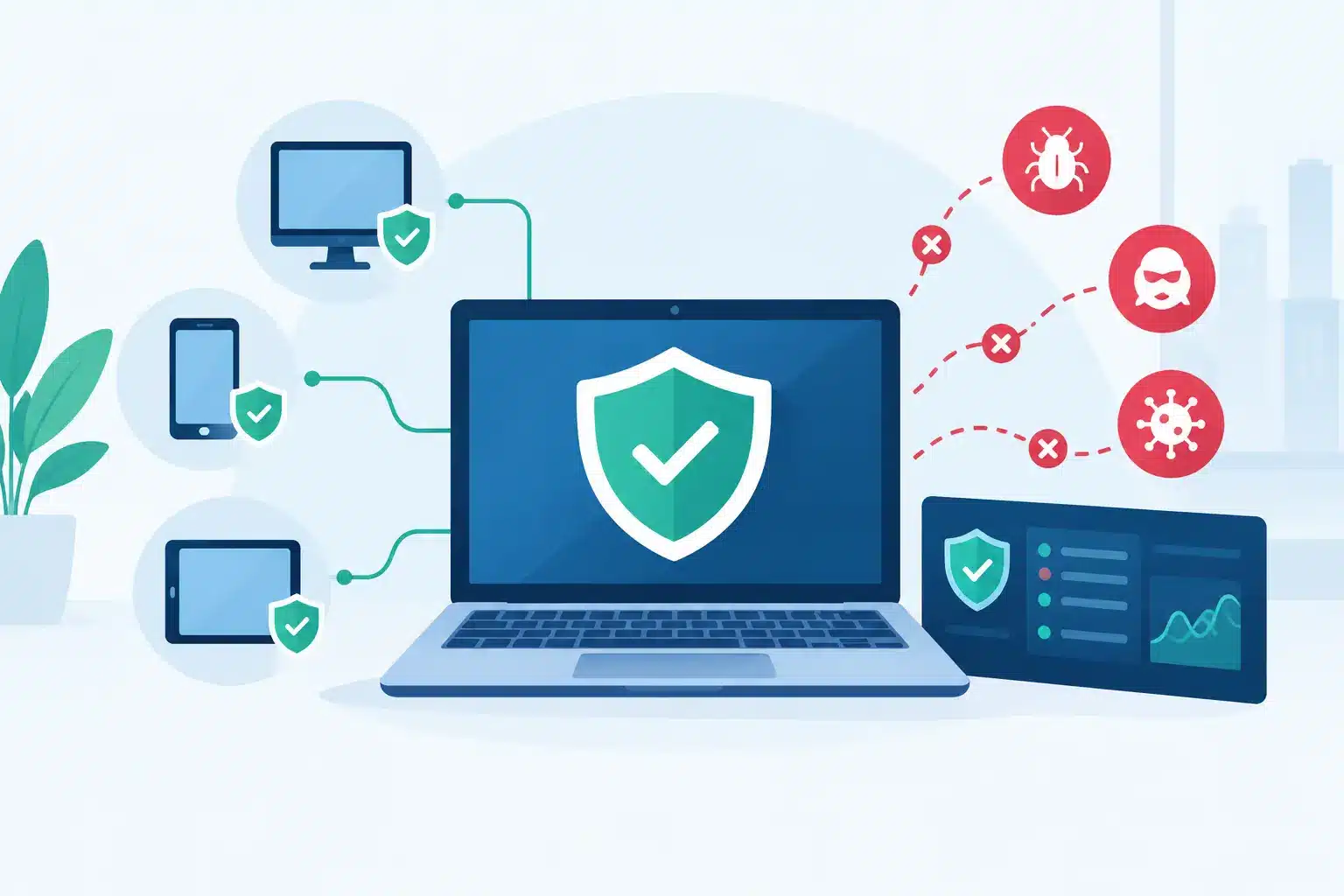
Endpoint detection and response, commonly called EDR, monitors activity across devices such as laptops, desktops, servers and virtual machines. Unlike traditional antivirus, which focuses mainly on known malicious files, EDR records endpoint behaviour and looks for suspicious patterns.
That distinction matters. Many modern attacks do not rely on an obvious virus. An attacker may use valid credentials, remote administration tools or scripts that look harmless in isolation. EDR gives security teams the evidence needed to identify unusual behaviour, understand what happened and take action.
A capable EDR service should provide three operational outcomes. First, it should give you visibility across the devices that access business systems. Second, it should detect suspicious activity with enough context for a meaningful investigation. Third, it should support rapid containment, such as isolating a compromised device before an attacker moves across the network.
Technology alone does not guarantee those outcomes. Coverage, configuration, alert handling and clear ownership all determine whether EDR becomes a useful control or another dashboard that nobody has time to monitor.
Endpoint detection response review: what to assess
An effective endpoint detection response review should look beyond a supplier’s feature list. The right solution depends on your number of devices, internal IT capacity, compliance obligations, operating hours and tolerance for risk. A 24-hour logistics business and a professional services firm with a small office face different operational requirements, even if both use the same cloud applications.
Start with endpoint coverage
The first issue is simple: which devices are actually protected? Businesses commonly find gaps during a review. Remote laptops may have missed an agent deployment, servers may be protected by a different product, and older devices may no longer support the chosen software.
Create a clear inventory that includes Windows, macOS and Linux devices, on-premise servers, cloud workloads and devices used by contractors where appropriate. Mobile phones are often managed through a separate platform, but they should still be considered as part of the wider access and identity strategy.
Coverage also means checking whether the agent is healthy. An installed agent that is out of date, disabled or unable to report back is not providing the protection the business expects. Reporting should make these exceptions visible without requiring manual checks across several portals.
Examine detection quality, not alert volume
An EDR platform can produce thousands of alerts. That does not mean it is improving security. Too many low-value alerts create fatigue, and fatigue leads to missed priorities.
Ask how detections are assessed and prioritised. A useful service should distinguish between routine policy breaches, suspicious activity that needs investigation and incidents requiring immediate containment. It should also provide context: the affected user, device, process, files, network connections and related events.
False positives are part of endpoint security. The aim is not zero alerts, which can indicate that the controls are too weak. The aim is a manageable stream of alerts that is tuned to your environment and acted on according to clear severity levels.
This is especially relevant where businesses use specialist applications, legacy systems or administration tools that can resemble malicious behaviour. A provider needs the technical depth to tune controls without creating unnecessary disruption for the teams keeping the business running.
Test the response model
Detection without response creates a dangerous gap. During your review, establish who receives alerts, who investigates them and who has authority to isolate a device or disable an account.
For organisations with an internal security team, EDR may be managed in-house. This can offer direct control, but it also requires skilled staff, round-the-clock coverage and disciplined incident processes. If alerts arrive outside business hours, the organisation must be confident that someone will respond.
Many small and mid-market businesses benefit from managed detection and response, or MDR. In this model, security specialists monitor alerts, investigate suspicious activity and escalate confirmed risks. However, the scope varies significantly between providers. Some services notify your team and wait for approval. Others can take agreed containment actions immediately.
The commercial question is straightforward: what response is included, at what time, and with what authority? A service that only sends an email after a confirmed attack may not meet the needs of a business that depends on continuous access to customer systems, finance platforms or production services.
Check integration with the wider security estate
Endpoint security works best when it is connected to the rest of your IT environment. Alerts become more meaningful when they can be correlated with identity events, email security, firewall activity, cloud logs and backup status.
For example, a suspicious login may be less serious if the user is travelling and has completed multi-factor authentication. It becomes more urgent if it is followed by mailbox rule changes, unusual file downloads and activity on a finance workstation. Individual tools may see fragments. A managed security service should be able to join the evidence and act on it.
Integration also reduces operational friction. If EDR is managed separately from Microsoft 365 security, patching, backups and user access, responsibility can become blurred during an incident. Multiple suppliers may each claim that another system should have stopped the attack.
A one-partner model provides a clearer route. The provider responsible for your endpoint protection should understand how your devices, identity controls, infrastructure and recovery processes work together.
Questions to ask before selecting a service
A focused review should leave you with practical answers, not vague assurances. Ask whether the service covers every endpoint type you operate and whether deployment, health monitoring and reporting are included. Confirm how alerts are reviewed, the expected response times and whether monitoring is available outside office hours.
You should also ask what containment actions can be taken without delay. Isolating a device can prevent further spread, but it may also interrupt a critical user or system. The right approach balances speed with agreed business rules. Your provider should know which devices can be isolated automatically and which require escalation to a named contact.
Clarify what happens after an incident. Does the service provide investigation findings, recommendations and support for recovery? Are incident response hours included, capped or charged separately? These details affect both budget certainty and the level of support available when pressure is highest.
Finally, review ownership of data and reporting. Business leaders need concise information on security posture, outstanding risks, patching gaps and incidents handled. IT teams need enough technical detail to make improvements. A useful reporting process serves both audiences without burying them in noise.
Cost should be measured against operational risk
EDR pricing is commonly based on the number of endpoints, but the headline per-device cost is only part of the decision. A lower-cost product may require internal staff to investigate alerts, manage policies and coordinate response. That can become expensive if expertise is limited or key staff are unavailable.
Managed services may cost more per endpoint, but they can provide monitoring, threat investigation, tuning and a defined escalation process. For many businesses, that is easier to budget for than the impact of an incident that stops staff working for several days.
Cyber insurance is also relevant. Insurers increasingly expect evidence of basic security controls, including endpoint protection, multi-factor authentication, patch management and secure backups. EDR will not replace these measures, but it can demonstrate that the business has meaningful detection and response capability in place.
Build a review around real business scenarios
The strongest test of an EDR service is not a product demonstration. It is a practical scenario. Consider what should happen if a finance user enters credentials on a phishing site, a remote laptop runs suspicious software, or ransomware begins encrypting files on a shared server.
For each scenario, identify how the threat is detected, who investigates it, how quickly the affected device can be contained, how users are supported and how services are restored. If those answers require calls to several providers or depend on a single internal employee being available, the process needs strengthening.
WestTech helps businesses bring endpoint security, managed IT, infrastructure and recovery planning under clearer ownership. The goal is not to add another security tool. It is to reduce uncertainty when an incident demands fast, informed action.
A useful endpoint detection response review should leave your business with a clear view of what is protected, what happens when a threat is found and who is accountable for the next move. That clarity is what turns security investment into operational confidence.