

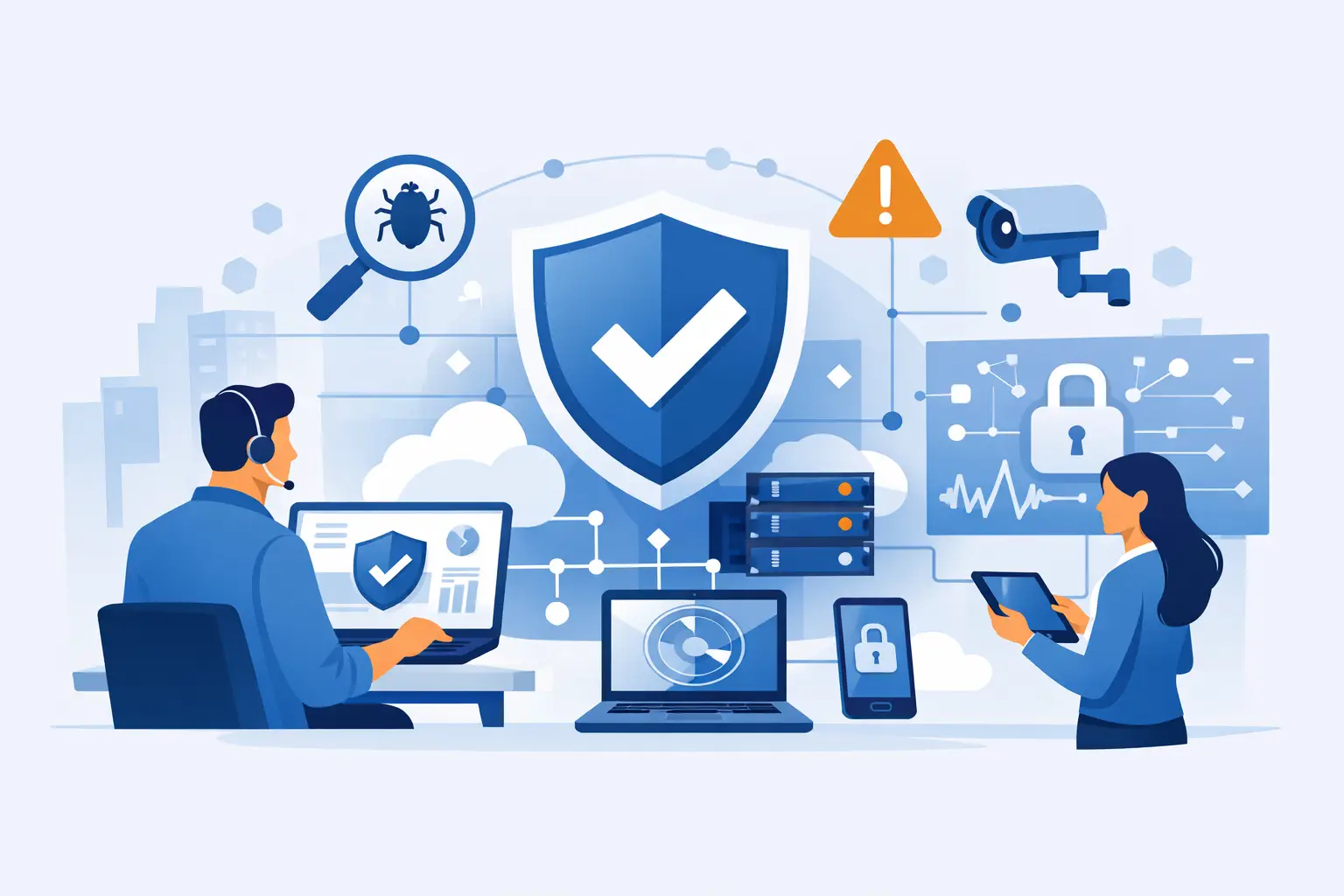
A suspicious sign-in at 02:00 is not automatically a security incident. It may be an employee travelling, a failed integration, or an attacker using stolen credentials. The difference matters, because a real threat can move from one compromised account to disrupted operations very quickly. So, what is managed detection response? It is a cybersecurity service that combines security technology with specialist human analysts to identify, investigate and actively respond to threats in your IT environment.
For businesses without a large in-house security operations centre, MDR provides the monitoring and response capability needed to reduce the time between an attack beginning and someone taking meaningful action. It is not simply another dashboard or a stream of alerts. A well-run MDR service gives your business a team accountable for separating genuine risk from routine noise and helping contain incidents before they become costly outages.
What Is Managed Detection Response?
Managed detection and response, usually shortened to MDR, is an outsourced security service designed to find threats that traditional controls may miss. It monitors security data from systems such as endpoints, user identities, cloud services, email platforms, firewalls and networks. Detection technology flags unusual activity, then experienced analysts assess the evidence and determine whether it requires action.
When a credible threat is identified, the MDR provider investigates its scope and supports, or carries out, the agreed response. That could mean isolating a compromised laptop, disabling a user account, blocking a malicious connection or removing persistence mechanisms used by an attacker. The exact actions depend on the service agreement, your systems and the access you authorise.
This is the key distinction. Prevention remains essential, but no preventive control is perfect. Phishing messages get through, passwords are reused, software vulnerabilities emerge and legitimate tools can be misused by criminals. MDR assumes that some threats will bypass the first line of defence and focuses on finding them early enough to limit the damage.
How Managed Detection Response Works in Practice
An MDR service begins by connecting the agreed data sources. Endpoint detection and response software is commonly central to the service because it records activity on laptops, servers and other devices. However, endpoint data alone does not always tell the full story. Identity logs, cloud activity, firewall events and email telemetry can add the context needed to understand how an incident started and where it may spread.
The provider’s detection platform looks for known indicators of compromise as well as patterns that suggest suspicious behaviour. For example, it may identify an administrator account signing in from an unfamiliar location, a device attempting to encrypt large numbers of files, or unusual data transfers from a cloud application.
Technology generates the signal, but analysts provide the judgement. They validate alerts, investigate related events and assess potential business impact. This reduces the alert fatigue that affects many internal IT teams. Rather than asking a busy IT manager to review hundreds of low-value warnings, MDR should escalate clear, prioritised incidents with evidence and practical next steps.
Response is where service quality becomes visible. Some providers will notify your team and guide them through containment. Others can take defined actions directly, such as isolating an endpoint or blocking an IP address. Neither approach is automatically better. Businesses with strict change control may want approval before action, while those with limited out-of-hours cover may prefer a provider authorised to act immediately on high-confidence threats.
MDR Is Not the Same as Antivirus, SIEM or MSSP
These services and tools can work together, but they solve different problems.
Antivirus and endpoint protection aim to stop known malicious files and behaviours. They are necessary controls, but they may not detect credential misuse, fileless attacks or suspicious activity that looks like normal administration.
A SIEM, or security information and event management platform, collects and correlates logs from across an environment. It can be powerful, particularly for organisations with complex compliance requirements. But a SIEM requires careful configuration, ongoing tuning and people who can investigate what it finds. Buying a SIEM without the operational capacity to run it often creates more data, not more security.
A managed security service provider, or MSSP, may monitor firewalls, manage security tools or provide broad security administration. MDR is generally more focused on threat detection, investigation and incident response. There is overlap in the market, so decision-makers should look beyond labels. Ask what is monitored, who investigates alerts, what actions are included and how quickly the provider will engage during a confirmed incident.
The Business Case for MDR
The value of MDR is not just that somebody watches security events around the clock. It is that your business gains a repeatable process for making faster, better-informed decisions under pressure.
A ransomware incident, compromised Microsoft 365 account or unauthorised data transfer can create disruption well beyond the IT department. Operations may stop, customer confidence may be affected and leadership may need to make decisions about notifications, recovery and insurance cover. Early containment reduces the number of systems affected and gives the business more options.
MDR can also help internal teams use their time properly. Most SMB and mid-market IT functions are responsible for day-to-day support, infrastructure projects, onboarding, cloud services and business continuity. Expecting the same team to monitor security alerts continuously, investigate advanced threats and respond at any hour is rarely realistic. MDR adds specialist capacity without the cost and complexity of building a full security operations centre internally.
For organisations working towards cyber insurance or compliance requirements, the service can support a more mature security posture. It does not replace policies, access controls, backup testing or staff awareness training. It does, however, provide evidence that threats are being actively monitored and handled through a documented process.
What to Look for in an MDR Provider
The right service depends on your environment and your risk profile, but clarity matters more than impressive terminology. Before choosing a provider, establish whether the service covers your endpoints only or also includes identity, cloud, network and email monitoring. Attackers frequently move between these areas, so visibility gaps can slow down an investigation.
You should also understand the human element. Ask whether analysts are available 24/7, where they are based, how incidents are validated and whether they will communicate directly with your IT team during an event. A monthly report is useful, but it is not a response capability.
Response authority deserves particular attention. Define in advance which actions the provider may take without waiting for approval. For example, isolating a device that is actively spreading ransomware may be appropriate, while disabling a senior user’s account might require a named escalation route. Clear rules prevent delay when minutes matter.
Finally, consider accountability across the wider technology estate. An MDR provider can identify a threat, but remediation may involve device management, identity configuration, firewall rules, backup recovery and user support. Working with a technology partner that understands the environment end to end can reduce hand-offs and confusion during an incident.
When MDR Is a Strong Fit
MDR is particularly useful when a business holds sensitive data, depends heavily on cloud applications, supports remote or hybrid workers, or cannot tolerate prolonged downtime. It is also a practical choice for organisations that have invested in security tools but know their teams cannot monitor and investigate them continuously.
It may be less suitable as a first security purchase for a business with major fundamentals still missing. If multi-factor authentication is not in place, backups are untested, devices are unmanaged or unsupported systems remain connected to the network, those gaps should be addressed alongside any MDR deployment. Managed detection response is most effective when it sits on top of sound operational controls.
The goal is not to buy more security technology. It is to make sure that when suspicious activity appears, the right people see it, understand it and act before it becomes a business disruption. That is the practical standard worth holding any MDR service to.