
Most businesses are not struggling to find AI tools. They are struggling to answer a simpler question: can we use them safely, legally and with confidence? That is where ai compliance moves from a legal concern to an operational one. If your teams are already testing copilots, automating workflows or feeding business data into AI platforms, compliance is no longer a future project. It is part of day-to-day risk management.
For business leaders, the real issue is not whether AI has value. It does. The issue is whether its use is controlled enough to protect customers, staff, data and decision-making. If that control is weak, AI creates the same pattern many organisations already know too well – fast adoption, fragmented ownership and problems that only surface once damage is done.
What ai compliance actually means
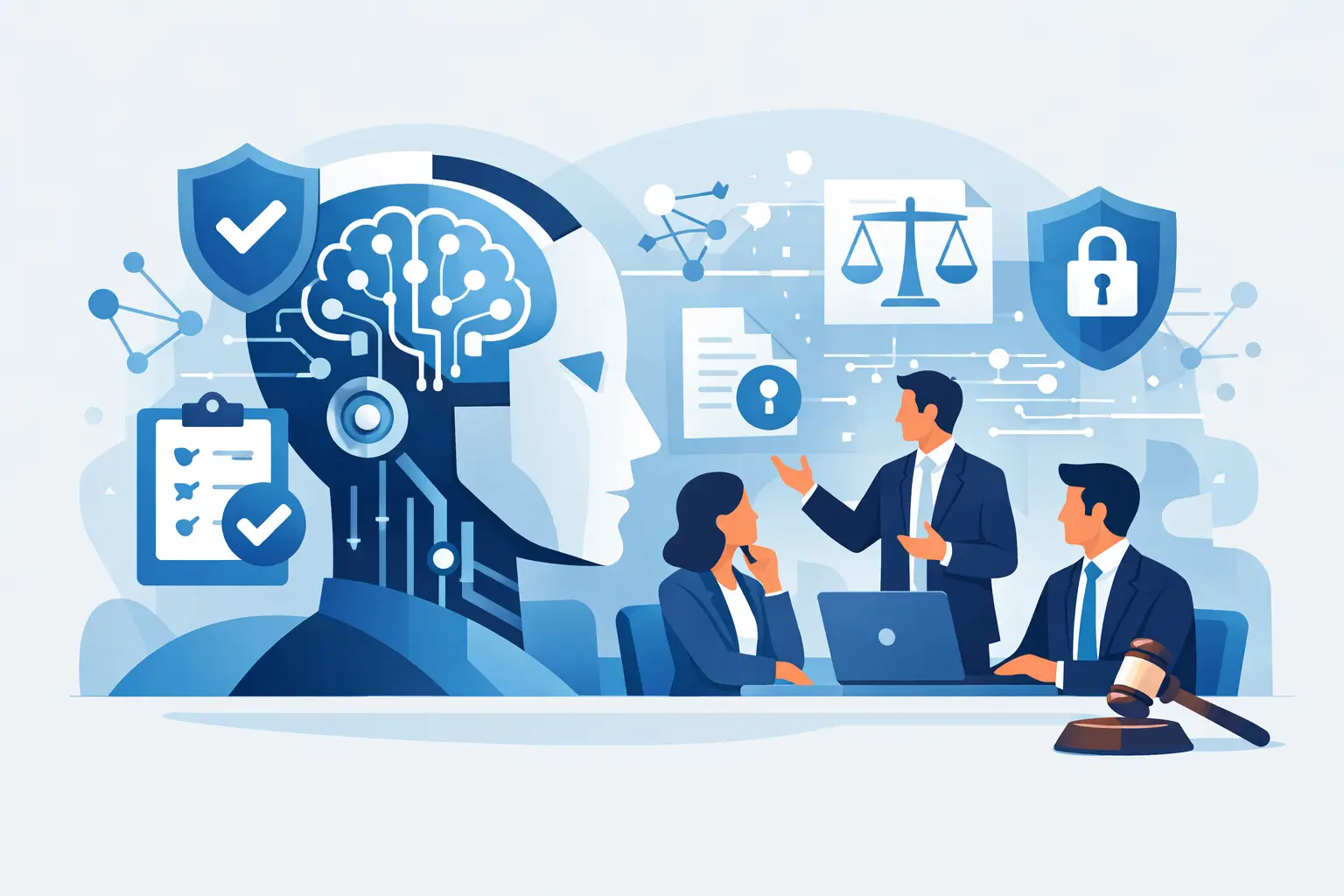
AI compliance is the set of controls, policies and governance measures that make sure AI systems are used in a lawful, secure and accountable way. That includes data protection, cyber security, record keeping, model oversight, procurement checks and clear internal rules around who can use what.
In practice, it is less about a single regulation and more about joining several responsibilities together. A business may need to consider UK GDPR, sector-specific requirements, cyber insurance conditions, contractual obligations and emerging AI regulation at the same time. The challenge is not just understanding the rules. It is making them workable across live systems, busy teams and multiple suppliers.
That is why AI compliance should not sit in one department and nowhere else. Legal can define obligations, but IT controls the environment. Security manages risk. Operations owns process. Leadership sets the tolerance for what is acceptable. If those areas are disconnected, compliance looks fine on paper and fails in practice.
Why AI creates a different kind of compliance problem
Most compliance programmes were built around known systems, defined data flows and approved suppliers. AI changes that. Staff can access new tools in minutes, often without procurement, security review or management approval. A browser tab becomes a business process before anyone has documented it.
There is also a visibility problem. Traditional software tends to behave predictably. AI systems can generate variable outputs, rely on third-party models and process prompts in ways users do not fully understand. That creates questions that standard software policies do not always answer. Can customer information be pasted into a public model? Who validates the output? What records exist if a decision is challenged later?
The answer is not to block everything. Blanket bans usually fail because teams will still look for shortcuts when pressure is high. A better approach is controlled adoption. Decide where AI can create value, define which tools are permitted, and put guardrails around data, access and oversight from the start.
The business risks behind poor ai compliance
When AI is adopted without control, the first risk is usually data exposure. Staff may enter sensitive client, employee or financial information into tools that were never approved for that purpose. Even if the tool itself is reputable, your business may still be in breach if data handling terms are unclear or retention cannot be verified.
The second risk is bad decision-making at speed. AI can help teams move faster, but it can also produce inaccurate summaries, flawed recommendations or biased outputs that look convincing. If nobody is checking those results, errors can spread through customer service, HR, finance or operations before anyone spots them.
The third risk is accountability. If an AI-assisted process causes harm, someone still needs to explain what happened. That becomes difficult when there is no usage policy, no audit trail and no named owner for the system. Regulators, insurers and customers do not accept “the tool made a mistake” as a serious response.
There is also a commercial risk that is easy to miss. Businesses with weak AI governance often slow down later because every new use case triggers uncertainty. Procurement delays. Security raises last-minute objections. Leaders lose confidence. Good compliance does not just reduce risk. It removes friction from future deployment.
What good AI compliance looks like in practice
A workable AI compliance model starts with visibility. You need to know which tools are already in use, who is using them and what type of data is being processed. Many organisations skip this step and move straight to writing policy. That leaves them with rules for an environment they do not fully understand.
The next step is classification. Not every AI use case carries the same risk. Drafting internal notes is different from analysing customer records or supporting hiring decisions. Treating every use case the same wastes time. Treating all of them as low risk is worse. A sensible framework separates low, medium and high-impact usage so review effort matches actual exposure.
From there, controls need to be practical. That normally includes approved tool lists, role-based access, data handling restrictions, supplier due diligence and clear approval routes for new AI use cases. Staff also need guidance written in plain language. If the policy reads like a legal memo, it will be ignored.
Training matters, but it has to be specific. Telling people to “use AI responsibly” is not enough. They need examples of what can and cannot be entered into tools, when human review is required and how to escalate concerns. Good training reduces accidental misuse more effectively than heavy-handed warnings.
Monitoring is the final part that many businesses under-resource. Controls need checking. Usage changes. Tools evolve. Suppliers update terms. New regulations emerge. AI compliance is not a one-off sign-off. It is an operating discipline.
Where business leaders should focus first
If you are responsible for IT performance, operations or risk, start with the areas where AI use is likely already happening quietly. Customer support, sales, marketing, HR and administration are common entry points because the tools are easy to access and the productivity gains are immediate.
Ask direct questions. Which AI tools are being used today? What data goes into them? Who approved them? What happens if the output is wrong? If nobody can answer clearly, that is the gap to fix.
Then review your existing foundations. In many cases, AI compliance is not a separate programme from cyber security, access control and supplier governance. It depends on them. If your identity controls are weak, devices are unmanaged or vendors are poorly assessed, AI adoption will magnify those issues rather than solve them.
This is also where a single accountable technology partner can make a real difference. AI governance often stalls because businesses are juggling separate providers for infrastructure, cyber security, compliance advice and operational support. The result is delay and finger-pointing. A joined-up approach makes it easier to assess tools, apply controls and support users without adding another layer of complexity.
The trade-offs leaders need to accept
There is no version of AI compliance that removes all risk. The goal is controlled use, not perfect certainty. Some businesses will need tighter restrictions because of their sector, contractual obligations or sensitivity of data. Others can move faster with lower-risk internal use cases.
That trade-off matters. Over-control can block useful innovation and frustrate teams. Under-control can create regulatory, security and reputational damage. The right balance depends on what your business does, what data it holds and how much assurance customers expect.
It also depends on supplier choice. Public AI tools may be quick to adopt but harder to govern. Enterprise-grade platforms usually offer stronger admin controls, data protections and auditability, but they require investment and proper deployment. Cheap access can become expensive once risk and remediation are factored in.
AI compliance is becoming a leadership issue
For many organisations, AI started as a productivity experiment. It is now moving into core workflows, customer interactions and decision support. That shift changes the conversation. This is no longer just about whether staff can save time. It is about whether the business can prove control.
Leaders who treat AI as another unmanaged app problem will spend more time reacting than planning. Leaders who treat compliance as an enabler can move faster with clearer rules, better oversight and fewer surprises.
The practical next step is not to produce a thick policy document and hope for the best. It is to identify current use, set ownership, define approved boundaries and align AI controls with your wider security and compliance posture. Once that foundation is in place, AI becomes easier to scale without creating avoidable risk.
If AI is already entering your business through staff demand, supplier platforms or operational pressure, waiting for perfect clarity is not a strategy. Put control in place early, keep it practical, and make sure the people using the tools understand the rules as well as the opportunity.