
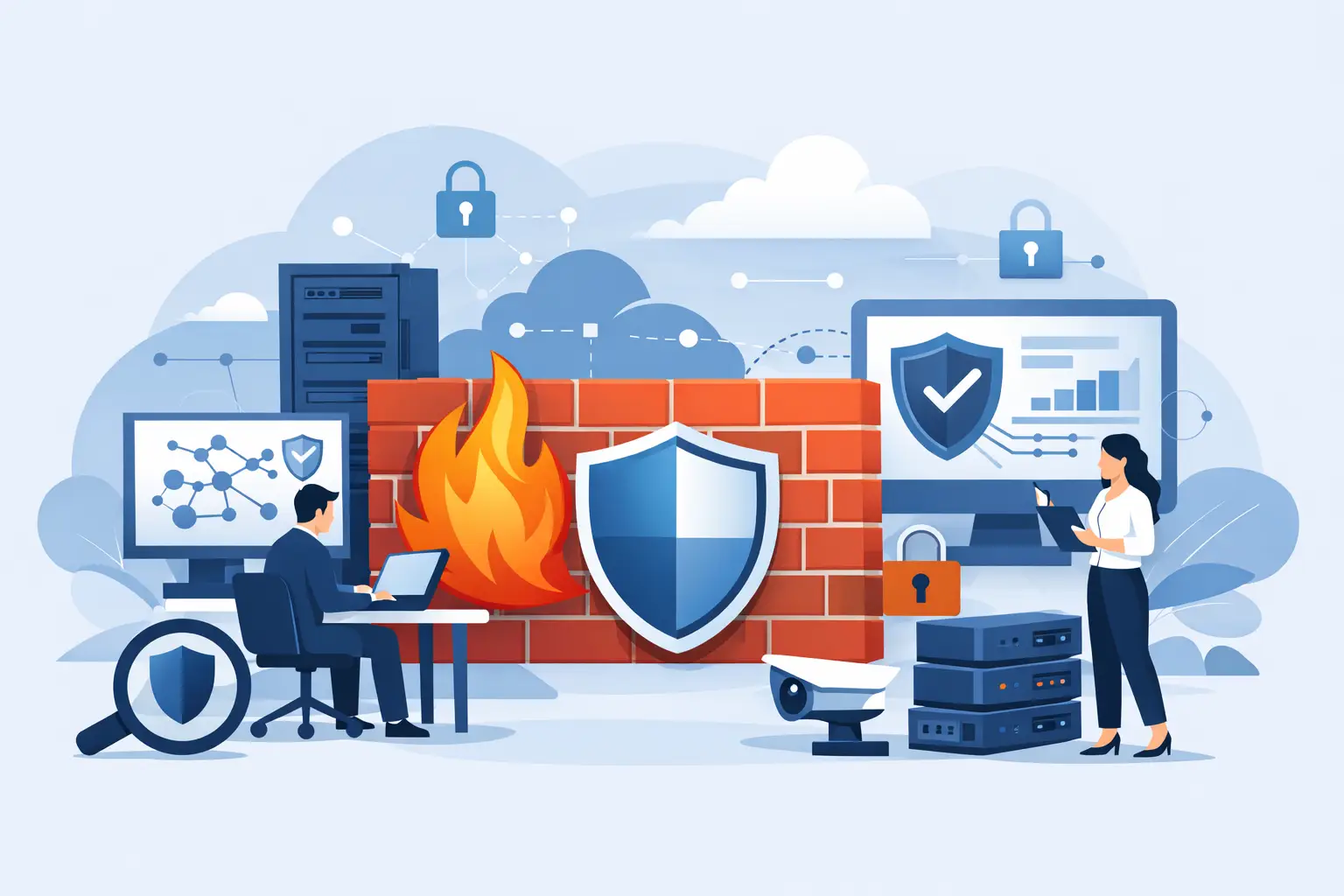
A firewall that has not been reviewed for six months is not a security control. It is a potential blind spot sitting between your business and the internet. The best business firewall management services do more than install a device and raise a ticket when it fails. They keep policies current, investigate threats, reduce operational noise and give your team a clear owner when security decisions need to be made quickly.
For IT managers and business leaders, the issue is rarely whether to have a firewall. The issue is whether anyone is actively managing it well enough to protect a changing business. New cloud applications, remote staff, site openings, supplier access and compliance obligations all affect the rules your firewall needs to enforce. Without ongoing ownership, small exceptions can become serious exposure.
What the Best Business Firewall Management Services Deliver
A managed firewall service should combine technology, skilled people and defined operational processes. The appliance matters, but the service around it determines whether it provides real protection or simply creates another platform for your internal team to maintain.
The strongest providers begin with visibility. They document the existing firewall estate, internet connections, remote access routes, network segments and critical applications. This establishes which traffic is necessary, where sensitive data sits and what a service interruption would cost the business. It also reveals old rules that were created for a project, supplier or employee who is no longer active.
From there, the provider should take responsibility for policy management. That includes reviewing and approving rule changes, removing unnecessary access, applying firmware updates, maintaining secure configurations and keeping an auditable record of what changed and why. A good service does not treat every request as urgent, but it does provide a clear path for genuine business-critical changes.
Monitoring is equally important. Firewalls generate large volumes of events, many of which are not meaningful on their own. A managed service should filter that noise, identify signs of malicious activity and escalate incidents with useful context. Your team needs to know what happened, what was contained, what action is required and whether similar risks exist elsewhere in the environment.
Protection without unnecessary disruption
Security controls can affect day-to-day work. Overly restrictive web filtering, poorly configured VPN access or an untested update can stop teams reaching essential applications. This is why firewall management is not just a technical exercise. It requires an understanding of business priorities, operating hours and acceptable risk.
The right provider will balance protection with practical access. They should test planned changes, maintain rollback procedures and communicate clearly before work that could affect users. For multi-site businesses, that also means recognising that a retail location, a head office and a warehouse may need different policies and support arrangements.
How to Compare Firewall Management Providers
When comparing services, avoid judging proposals solely by the firewall brand or the monthly price. Two providers can sell the same platform while delivering very different levels of oversight, response and accountability.
Start by asking who owns the service after deployment. If a supplier installs the equipment but another company monitors it, and a third manages your wider IT estate, incident response can become slow and fragmented. A single accountable partner can see the wider picture: the endpoint alert, the suspicious network connection, the affected user and the business service at risk.
Next, examine service coverage. Some providers offer business-hours support with optional out-of-hours escalation. That can be sufficient for a small office with limited external exposure. Businesses with online services, distributed sites, remote access or regulated data may need continuous monitoring and a defined security incident process. Neither model is automatically better. The right choice depends on the cost of downtime and the speed at which a threat could cause damage.
Ask how changes are controlled. A provider should be able to explain who can request a rule change, how it is authorised, how quickly standard and emergency requests are handled, and how the change is recorded. Informal access arrangements may feel convenient until an incident, audit or supplier dispute exposes a gap in responsibility.
Finally, look at reporting. Useful reports do not simply list blocked threats or device uptime. They show the state of the service, significant risks, actions taken, pending recommendations and trends that affect future investment. Decision-makers need a clear view of whether the firewall is supporting compliance, reducing exposure and keeping operations running.
Questions worth asking before you appoint a provider
A capable provider should answer these questions directly:
- What monitoring, alert triage and incident escalation are included in the service?
- How often are firewall rules, firmware and security configurations reviewed?
- Who approves policy changes, and what is the process for emergency access?
- Can you support all of our sites, cloud connections, VPN users and third-party access routes?
- What reporting will our IT and leadership teams receive each month or quarter?
- If an incident involves endpoints, identity or email, who coordinates the wider response?
Vague answers are a warning sign. Terms such as “fully managed” can mean anything from basic device monitoring to active policy ownership and 24-hour security operations. The scope should be explicit before the contract begins.
The Operational Gaps That Create Firewall Risk
Many firewall problems are not caused by a lack of technology. They are caused by neglected operational tasks. Rules accumulate over time. Admin access is shared too widely. Software updates are deferred because nobody wants to risk an outage. A temporary supplier connection is never removed. These are manageable issues when ownership is clear, but they can persist for years in a fragmented support model.
Remote access deserves particular attention. VPNs, cloud management portals and third-party remote support can all provide legitimate access to systems. They can also become a route into the network if credentials are stolen or accounts are not removed promptly. Strong firewall management works alongside identity controls, multi-factor authentication, endpoint protection and secure user processes. A firewall cannot compensate for weaknesses across the rest of the environment.
Segmentation is another area where managed expertise adds value. A flat network allows devices and users to communicate too freely. Separating guest Wi-Fi, office users, finance systems, operational technology, CCTV, digital signage and server infrastructure limits the effect of a compromised device. The design must be practical, however. Poor segmentation can make support and business processes unnecessarily difficult. The goal is controlled access, not complexity for its own sake.
Matching the Service to Your Business
A small professional services firm may need secure remote access, web protection, regular rule reviews and responsive support from a provider that understands its cloud systems. A multi-site retailer may need centrally managed firewalls, resilient connectivity, separate networks for payment-related systems and guest access, plus coordinated support when a site cannot trade. A business with data-centre or critical infrastructure requirements may require tighter change control, more detailed reporting and around-the-clock escalation.
This is why a fixed package is not always the right answer. Your service should reflect the number of sites, users, internet connections, cloud services, regulatory duties and critical applications involved. It should also account for the skills already available internally. An experienced IT team may retain control of selected changes while outsourcing monitoring and specialist support. A leaner team may benefit from a provider taking full day-to-day ownership.
WestTech approaches firewall management as part of the wider operating environment, rather than an isolated device. That means connecting network protection with managed IT support, cyber security, compliance requirements and the practical realities of keeping sites, users and services available.
What Good Firewall Management Looks Like in Practice
The best service is visible when it prevents disruption and easy to engage when decisions are needed. Your provider should know your environment, respond without repeated handovers and explain risks in plain language. They should identify ageing hardware before it fails, flag insecure access before it is exploited and help plan upgrades around business operations.
You should also expect transparency. That includes agreed service levels, clearly defined responsibilities, documented changes and commercial terms that make sense. Security is a long-term operational commitment, so the relationship matters as much as the initial deployment.
A useful next step is to review your current firewall rules, support scope and incident process together. If no one can clearly explain who is watching the firewall, who can change it and who will act at 2am, the service needs attention before an attacker tests those gaps.